
The Ultimate Guide to Landscaping Project Management

A beautiful backyard design means nothing if the drainage fails or the retaining wall violates city code. In high-stakes urban markets like Toronto, Los Angeles, or San Francisco, the difference between a dream landscape and a legal nightmare is professional oversight. While many homeowners view landscaping as a simple aesthetic upgrade, it is actually a complex construction project. Mastering landscaping project management by moving from hiring a gardener to managing a lifecycle is the only way to safeguard your investment, especially as growing vulnerabilities to extreme weather increase the risk of system failures.
The 5 phases of landscaping project management
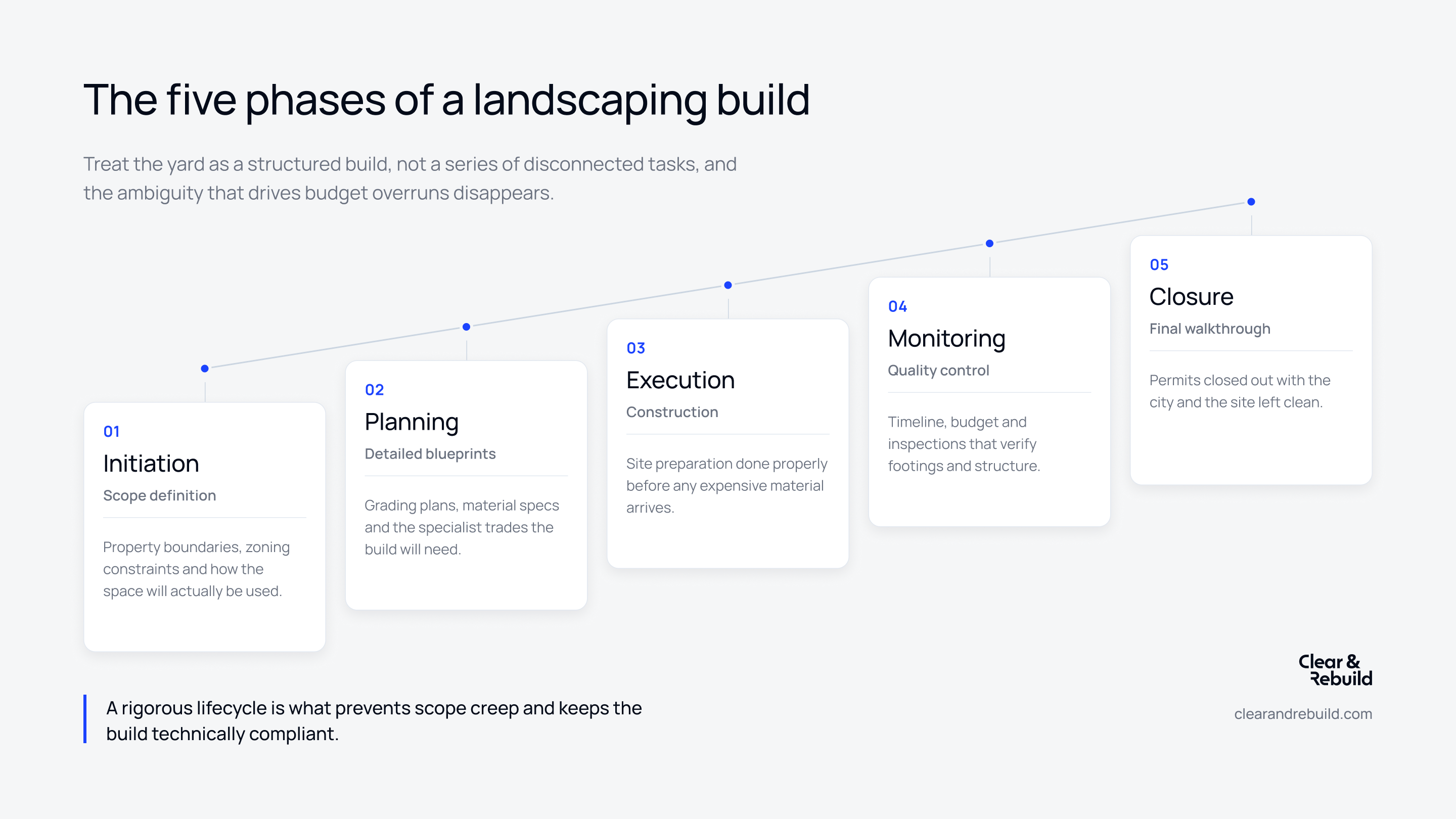
Successful projects follow a rigorous lifecycle to prevent scope creep and ensure technical compliance. By treating your renovation as a structured build rather than a series of disconnected tasks, you eliminate the ambiguity that leads to budget overruns. Understanding the typical landscape design-build process helps owners visualize how initial concepts transform into finished structures through specific engineering and construction milestones.
Phase 1 and 2: Initiation and planning
- Initiation: This phase defines the project scope. You must identify property boundaries, local zoning constraints, and the core functional goals of the space before any soil is moved.
- Planning: Detailed blueprints are created here. This includes grading plans, material specifications, and the selection of specialized subcontractors for masonry or irrigation. Clear and Rebuild helps owners navigate this by matching them with vetted pros who understand these specific urban requirements.
Phase 3 to 5: Execution, monitoring, and closure
- Execution: The build begins. This is where professional project management ensures that the site is prepared correctly before expensive materials arrive.
- Monitoring: We track progress against the timeline and budget. Regular inspections verify that structural elements, such as footings, are installed correctly and meet project requirements. Unlike directories that leave you after the referral, we stay involved through the project.
- Closure: The final walkthrough ensures every detail is finished. This includes verifying that all permits are closed out with the city and that the site is clean.
Landscaping project management phases
Balancing the project management triangle
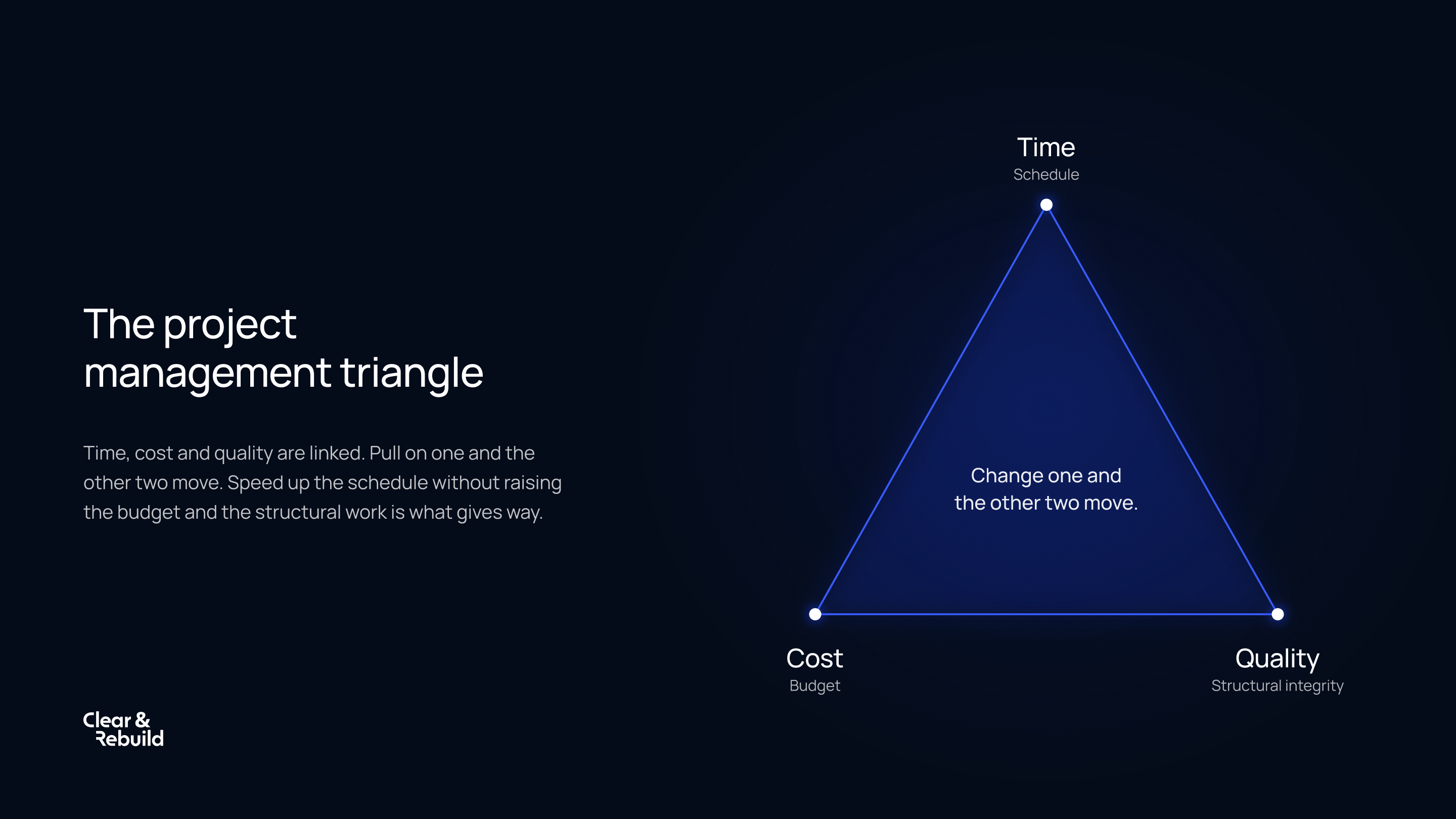
The project management triangle consists of three constraints: time, cost, and quality. In a renovation context, these three elements are closely linked. If you try to speed up the timeline without increasing the budget, the quality of the structural work often suffers. This leads to long-term failures like sinking pavers or cracked walls. Providing rigorous renovation project oversight ensures that these trade-offs are managed without compromising the safety or integrity of the build.
Managing these trade-offs requires a realistic understanding of urban construction. You cannot have the highest quality materials on a tiny budget without building in phases over a longer time. A professional manager helps you prioritize these constraints. This ensures the final result aligns with your long-term property goals.
Technical integration: Drainage, permits, and masonry
Integrating aesthetic design with functional infrastructure is where most unmanaged projects fail. In cities like Los Angeles and San Francisco, technical standards for outdoor spaces are as strict as those for the primary home. While residential work has its own challenges, those familiar with commercial construction project management will recognize the same need for strict adherence to building codes and safety regulations.
Infrastructure and compliance requirements
- Soil stability and retaining walls: Urban hillsides require specific engineering to prevent erosion and structural collapse.
- Water runoff management: You must ensure that new hardscaping does not redirect water onto a neighbor's property, which is a common source of litigation. Implementing climate-related property protections is critical during the grading phase to mitigate flood risks.
- Local : San Francisco and LA have unique seismic and fire-safety requirements for outdoor structures and kitchens.
- Professional cleaning standards: Ensuring the site is safe and presentable after the heavy equipment leaves is essential for post-construction aesthetics.
How to sequence specialized trades
Coordinating multiple subcontractors at once is a logistical challenge. It requires a specific order of operations. Sequencing ensures that no trade has to undo the work of another. For example, you must never install sod before the irrigation lines are tested.
- Demolition and site clearing
- Rough grading and drainage installation
- Trenching for utilities like gas, water, and electricity
- Hardscaping and masonry construction
- Planting and soft-scaping
What to do next: Verifying your project scope
- Verify contractor insurance: Ensure all specialized trades have active workers compensation and liability coverage.
- Check local licenses: Confirm that your lead contractor holds a valid license for the specific municipality where the work is performed.
- Review the drainage plan: Before signing a contract, ensure there is a clear plan for water mitigation that complies with local standards.
- Prepare for the handover: Use a post-construction cleaning punch list to ensure the site is ready to use as soon as the builders depart.

Ready to Start Your Landscape Project?
From permits and drainage to contractor coordination and final inspections, professional project oversight can help keep your landscaping project on track.
